Evidence library · Blastocystis sp.
The most common human intestinal parasite — and the research on whether it makes us ill
Blastocystis is found in the stool of a large share of people not connecting any health issues with their Blastocystis infection, yet this doesn't necessarily mean they are not having negative effects of the infection — and laboratory studies show that some subtypes degrade secretory IgA, damage the intestinal barrier and trigger apoptosis in gut cells. Reports also differ widely between individuals: some people carry the parasite with severe, long-lasting symptoms, while others describe none at all. That second group is harder to define than it looks — people counted as symptom-free may still have complaints such as fatigue, skin problems, joint pain or thyroid conditions like Hashimoto's, without ever connecting them to an intestinal parasite. This site gathers the peer-reviewed evidence on both sides, the reported associations with conditions such as Hashimoto's thyroiditis and inflammatory bowel disease, and what the diagnostic literature says about PCR and microscopy.
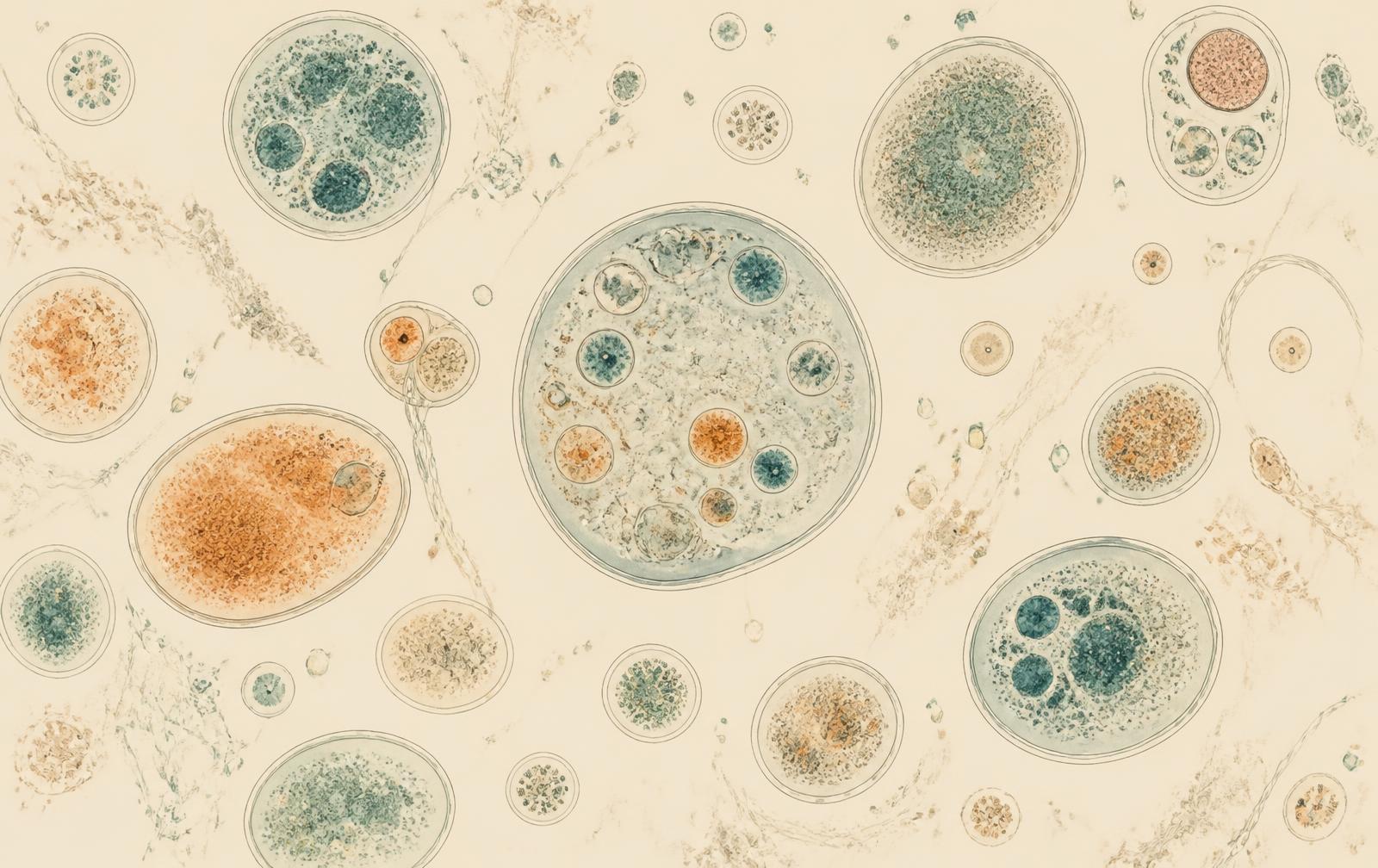
ST1–ST9+
Subtypes found in humans, with markedly different virulence in the lab
98%
Sensitivity of PCR on stool versus 48% for stained-smear microscopy
ZO-1
Tight-junction protein disrupted by Blastocystis proteases in cell models
56 989
Individuals in a 2024 study linking carriage to healthier diets — the counter-argument
Probable pathogenic factors
Cysteine proteases, IgA degradation, epithelial apoptosis, tight-junction breakdown and subtype-specific virulence — mechanism by mechanism, with citations.
Read moreLinks to other health problems
Hashimoto's thyroiditis, IBS, ulcerative colitis and Crohn's, colorectal cancer cell studies, chronic urticaria and rheumatoid arthritis.
Read moreHow Blastocystis is detected
Why PCR is the reference method, why microscopy still matters alongside it, and where to order a stool test kit.
Read moreBalance of evidence
Pathogen, passenger, or both — depending on the subtype?
Large metagenomic cohorts report that Blastocystis carriage tracks with higher microbial diversity and better cardiometabolic markers, while cell and clinical studies show subtype 7 and subtype 3 isolates damaging the epithelium and correlating with symptoms. The most consistent reading of the literature is that pathogenic potential is strain- and host-dependent rather than uniform across the genus — which is why subtyping and careful clinical correlation matter more than a positive result alone.